Safety Gear For Roller Derby
By Maven Mayhem
Where to get roller derby gear
There will be limited quantities of used equipment available for new skaters to check out during the weeks of bootcamp. There is a $10 rental deposit. If you have not yet purchased your equipment, plan to come to your first bootcamp session early to work with our trainers to find items that fit you properly. We do NOT have mouth guards available.
There are Facebook groups that may be helpful in obtaining items for reasonable prices for the budget-conscious, such as Roller Derby Recyclables. You can also shop online and in person at Legacy Skates KC.
Before you buy
This is your only body and you need to protect it! Accidents happen, and sometimes even the best protective gear cannot fully prevent injury. Good quality, properly fitted gear can keep you on the track better than options that are not appropriate or rated for roller derby.
You want gear rated for or designed specifically for roller derby. For example, knee pads or wrist guards for skateboarding are not designed for the same impact as roller derby. A cycling helmet is also not rated for roller derby play.
We encourage you to come to a recruitment night event or reach out for more information.
Use FCRD members as resources
Ask a veteran skater what brands they like and why. There are many options out there and skaters have their reasons for their personal preferences. The more people you talk to, the better idea you will have of what may work for you.
Also, take stock of your body. Do you have some broken bones in your past? An old knee injury that sometimes flares up? If you have some road miles on you, it may be smarter to invest in higher-quality protective new gear from the start rather than relying on used gear. Roller derby takes a toll on safety gear, and eventually it will all wear out and need to be replaced. Knee and elbow pads can stretch over time, while other things wear differently. Improper fit is a sign to replace the gear.
Required Gear
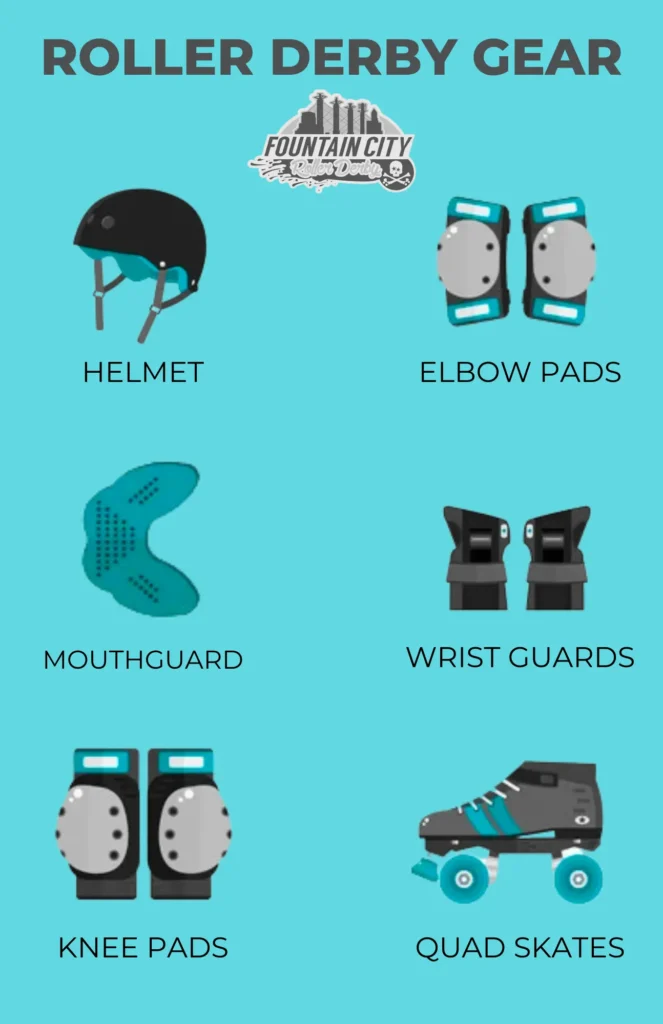
HELMET
Your most important asset is your head! Be sure your helmet is certified for multi-impacts and, ideally, it should have a CPSC and ASTM certification. Roller derby or hockey helmets will have a multi-impact rating.
As for fit, the helmet should come down over your head and the chin strap should be snug and secure. Your helmet should not be too tight or too loose. If your helmet is pushed back off your brow it may slide when you fall, allowing your forehead, nose or mouth to hit the floor. The helmet should sit no further than two fingers above your brow line.
MOUTH GUARD
If you have had extensive (and expensive) dental work, check with your dentist to see what they recommend. Otherwise, there are a variety of products on the market. Sporting goods stores carry mouthguards ranging in price from $10 – $60, and some brands offer dental insurance should something happen to your teeth while you are wearing their product.
Walmart has inexpensive options that work just fine for many skaters. (And the upside of cheap is that you can afford more than one, so you can keep a spare in your skate bag just in case.) One of the most popular brands among roller derby players is SISU, which is more expensive but comfortably small and perforated to avoid excess spit buildup.
No matter which mouth guard you choose, remember you have to mold it to fit your mouth. Don’t expect to just take it out of the package and pop it in your mouth and have it fit comfortably.
KNEE PADS
You might assume you want the lowest-profile kneepads you can find. But you would be wrong. You are going to fall on your knees. A lot. At every practice. Sometimes on purpose, sometimes by accident. Trust us—the more padding your knee pads have, the better protection they will offer and the happier you will be after falling drills.
There are lower-profile pads out there for derby that may work for you. A good rule of thumb is to pinch the padding in the center of the knee plate and not have it feel like your fingers are almost touching. That is a sign of too little padding.
Other things to consider are size and how they go on. Some pads slide over your feet and up your leg, while others have straps that Velcro around. Most have additional straps that fasten below the knee to keep them from sliding out of place. Ask around for recommendations and try on different brands if you can.
ELBOW PADS
The same advice applies to elbow pads. Although we don’t purposely fall on our elbows, you want a reasonable amount of padding and plate to protect you for those unexpected times when you can’t avoid landing on them.
WRIST GUARDS
There are many different styles of wrist guard to choose from, so as long as they offer the proper protection, the rest is up to your personal preference. Some have a plastic guard held in place by 2 Velcro straps while others fully encase your wrist and offer thick plastic cups on the palm of your hands. There are a million other styles in between.
The main thing is to make sure they fit you snugly and will keep your wrist from hyper-extending or allowing your wrist to break if you hit the floor. If the plastic flexes or you have too much wiggle room, they will not protect you when you need it. If you are smaller you may need to buy children’s sizes to get them to fit correctly.
SKATES
Roller derby skates have a low profile/do not cover the ankles and do not have a heel. They are designed to give you the most mobility to perform the sport. There is a wide variance in costs and some will have narrow heels or wider toe boxes. There’s waaaay too many options to put them all in a single post about gear. Reach out to a veteran skater or talk to a skate shop (Legacy Skates, for example) to discuss options and recommendations.
Remember—no matter how much or how little you spend on gear, the thing that makes the most difference in how you perform is effort and time on task. Nothing can replace the time spent learning a skill well.
Optional Gear
KNEE GASKETS
If you’ve had knee issues in the past, you will probably want to invest in added protection there. Gaskets are worn under the regular knee pad, provide an additional layer of padding and compression, and help keep the knee pad from slipping.
TAILBONE PAD
Ideally, a roller derby skater falls forward to make use of their knee pads, or chooses a side to fall on if falling backwards. A fall straight backwards can mean tailbone trauma. Skate suppliers offer protection for the tailbone in the form of a clip-on pad to the back of the shorts or a pair of padded shorts to wear underneath regular practice/game clothing.
PADDED SHORTS
AKA: Bum savers! There are a couple of brands out there that have what are essentially very padded shorts. Some skaters like to wear them due to past injury or because they are focusing on a new skill.
Check out our post about cleaning your gear!